Japanese Handicraft
Wooden Crafts
The Philosophy of Japanese Wooden Craft

Traditional Japanese wooden craft is shaped by a deep respect for nature and an intimate understanding of material. Wood is not treated as a uniform resource, but as a living substance—each species chosen for its grain, scent, strength, and aging qualities. Over generations, artisans have developed techniques that work with the wood rather than against it, allowing its natural character to guide both form and function.
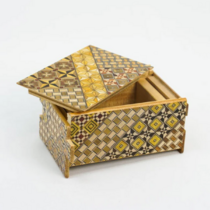
Precision is central to this craft, yet it is never mechanical. Countless components are cut, shaved, bent, or fitted by hand, often to tolerances measured in fractions of a millimeter. Joinery techniques are refined to eliminate the need for nails or metal fasteners, relying instead on balance, tension, and experience. These methods were born from architectural traditions, where durability, beauty, and restraint were essential, and have since been carried into objects made for everyday life.
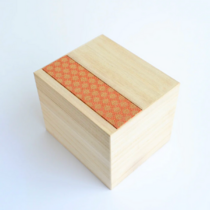
In Japanese wooden craftsmanship, usefulness and elegance are inseparable. Whether a piece is decorative or practical, its design is quiet and deliberate, inviting the hand as much as the eye. This subtle harmony reflects a long-held belief that well-made objects shape not only spaces, but also the rhythms of daily living.
Craft Shaped by Time and Daily Life

Japanese wooden crafts are created to endure—physically, aesthetically, and culturally. The processes involved are slow by necessity, requiring patience, repetition, and careful judgment at every stage. Materials are seasoned, bent, assembled, and finished through methods refined over centuries, resulting in objects that grow richer with use rather than wearing out.
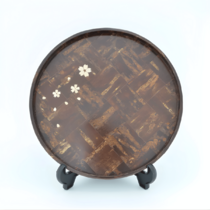
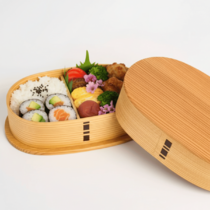
Many traditional wooden crafts were originally developed for daily life: containers that protect their contents, tools that sit comfortably in the hand, and furnishings that respond gently to light and air. Over time, these functional forms evolved into expressions of quiet beauty, where surface, proportion, and texture are considered as carefully as performance. Rather than striving for uniform perfection, subtle variations are embraced as signs of the human hand.
Today, these wooden works continue to resonate beyond their place of origin. In a modern world shaped by speed and disposability, they offer an alternative way of living—one grounded in care, longevity, and attention. To live with Japanese wooden craft is not simply to own an object, but to participate in a tradition that values time, restraint, and the enduring dialogue between nature and human skill.
Products
Clicking the link button will take you to our external e-commerce site.